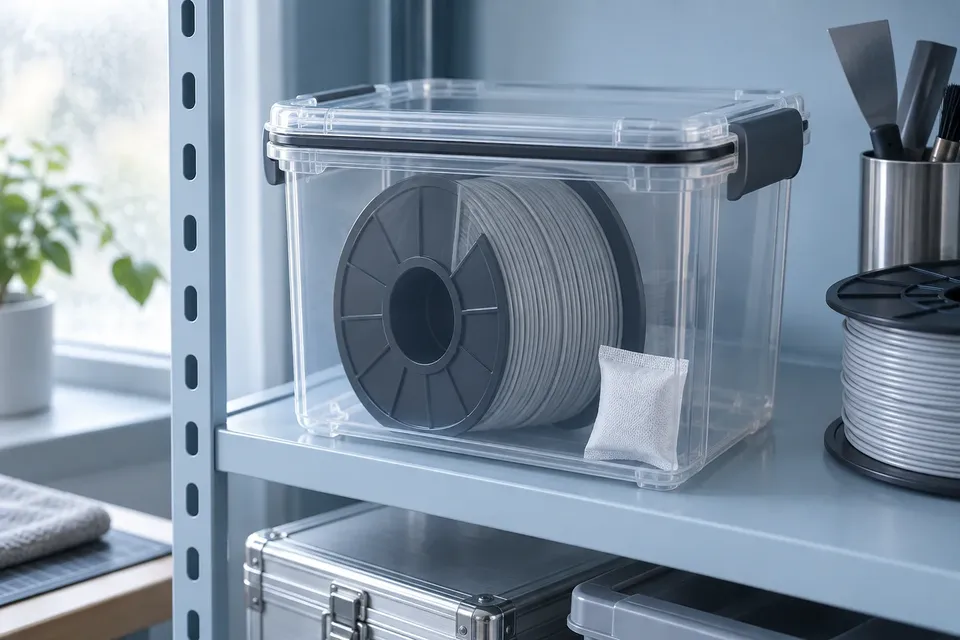
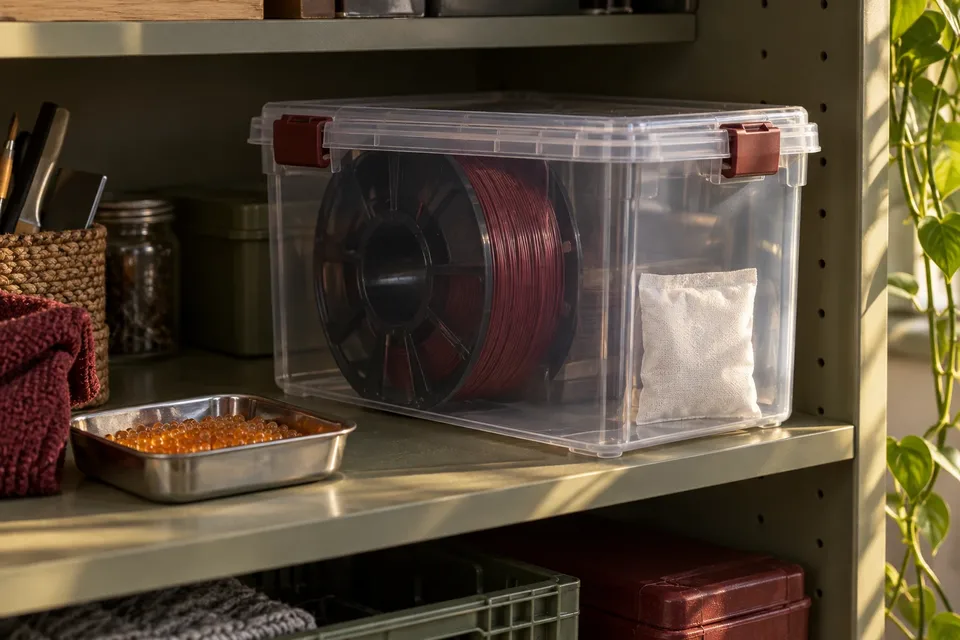
Silica Gel in a Filament Dry Box: Replace or Recharge?
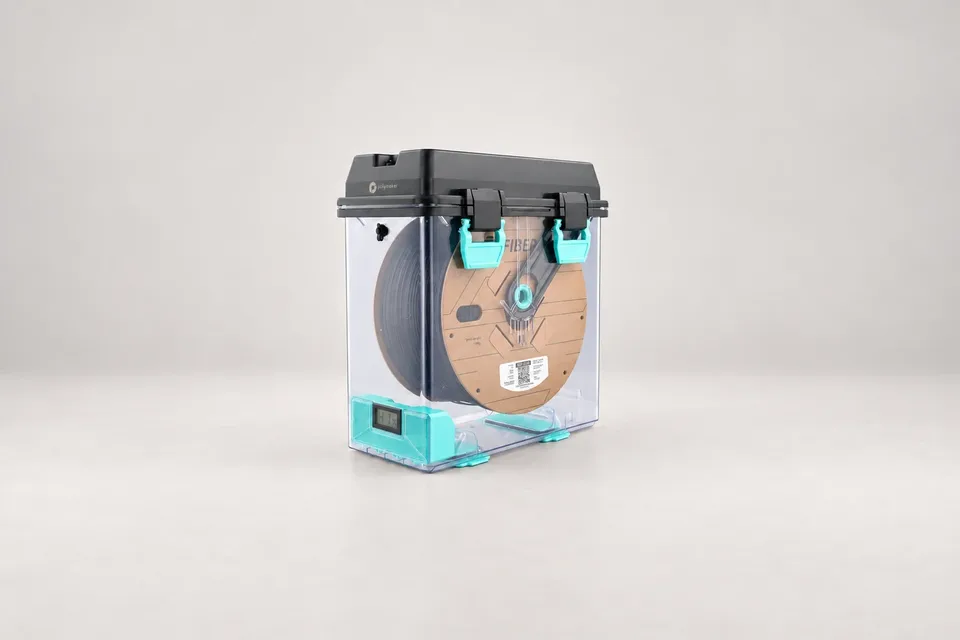
Decide when dry-box silica gel needs replacement or regeneration. Check indicator instructions, settled humidity, seals and product-specific heating limits.
Understand when to dry filament, how to store it and what to check before choosing a setup.
Work through the decisions in order, or jump to the question you have now.
Already have measurements? Check spool dimensionsDecide when dry-box silica gel needs replacement or regeneration. Check indicator instructions, settled humidity, seals and product-specific heating limits.
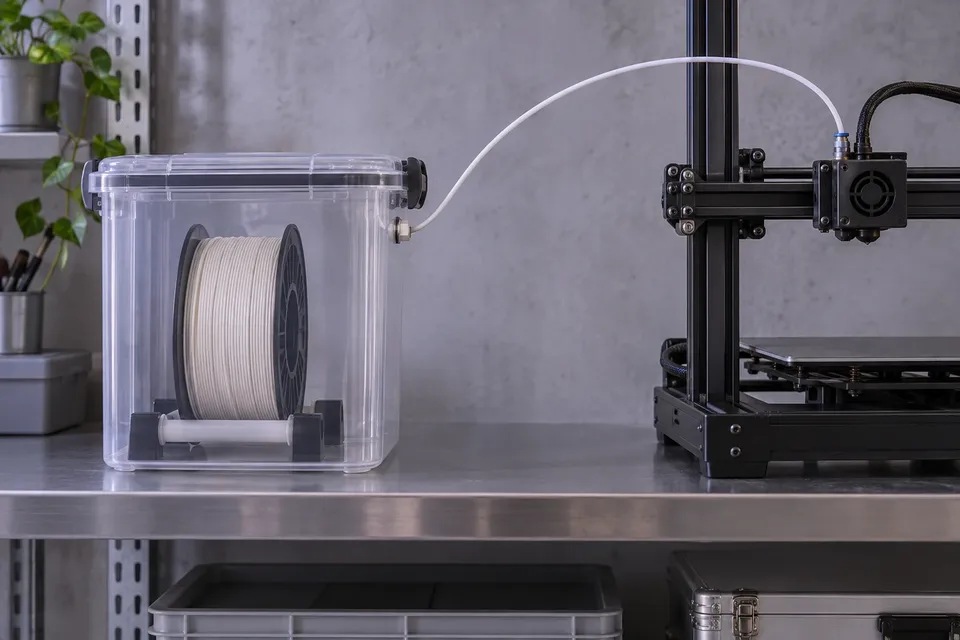
Set up a dry-box feed path, check spool rotation and PTFE routing, and isolate added resistance before changing your printer or slicer settings.
Compare three documented large-spool dryer configurations, required accessories and size limits before choosing equipment for your exact 3 kg reel.
Choose the right PolyDryer Box XL setup for storage or drying. Compare box, adapter and Dry Dock requirements, spool limits, and buying scenarios.
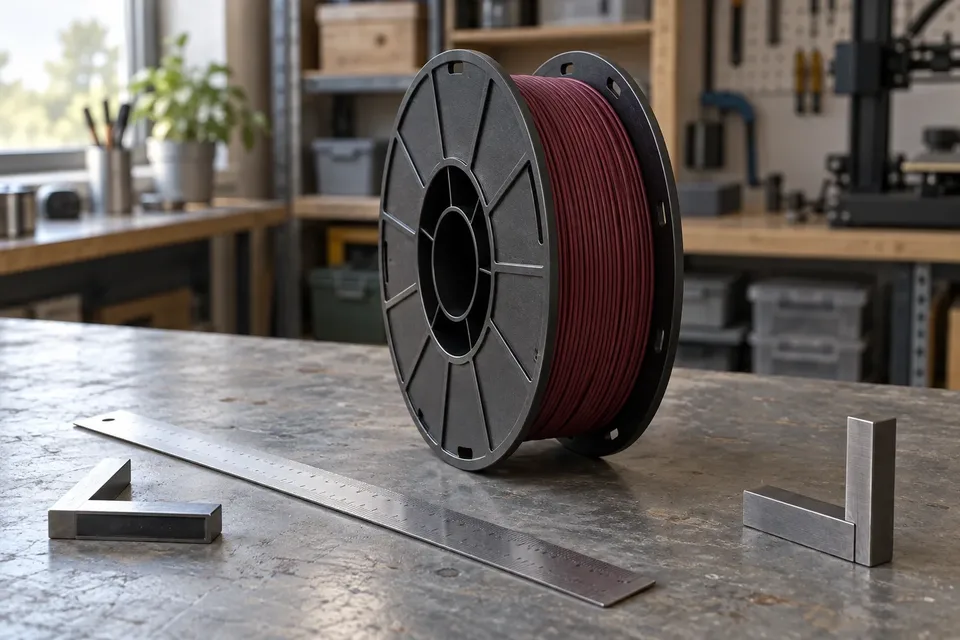
Measure a filament spool’s outside diameter and overall width, account for hubs and adapters, and compare your measurements with a dryer’s spool limits.
Plan dryer capacity, storage and bench space around the spools your next jobs need, including lid clearance, feed routes and preparation time.
Check the box, powered dock, adapter, power supply and storage closures before buying a modular filament dryer or adding another container.
A spool’s nominal filament weight does not establish its diameter, width or feed clearance. See how to evaluate a 1 kg or 3 kg compatibility claim.
Store opened filament with a repeatable routine: secure the end, inspect the seal, maintain desiccant and check the spool before its next print.
Decide whether your filament needs active drying, protected storage or both, and understand what a dry-box humidity reading can tell you.