Silica Gel in a Filament Dry Box: Replace or Recharge?
Decide when dry-box silica gel needs replacement or regeneration. Check indicator instructions, settled humidity, seals and product-specific heating limits.

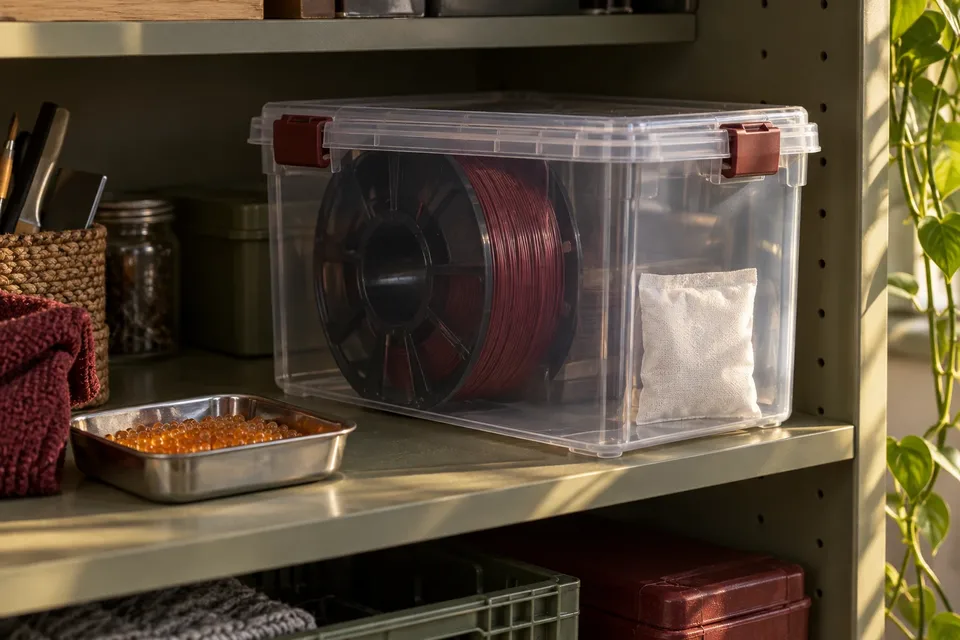
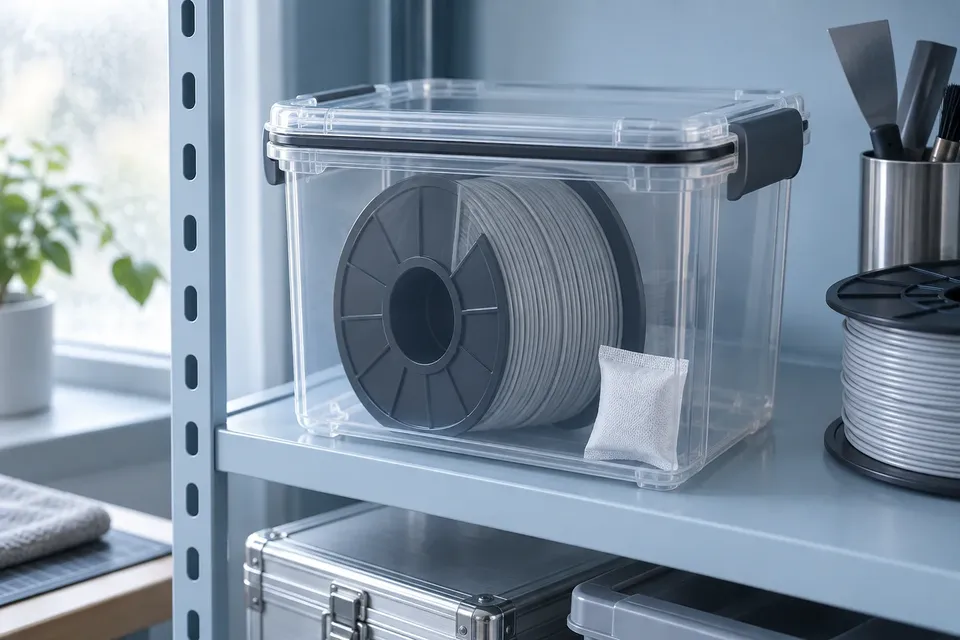
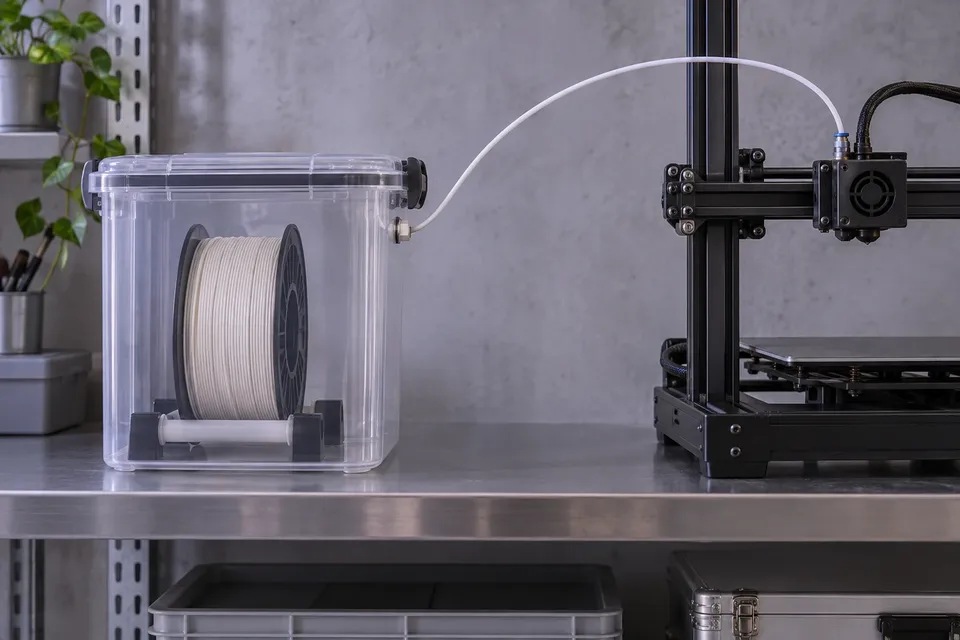
Recharge silica gel only when its maker provides a regeneration method for that exact product and packaging. Replace it when the material is unknown, damaged or not intended for reuse. Before either choice, check the dry box: an open outlet or poorly seated lid can keep introducing moisture even when the desiccant is fresh.
The desiccant helps manage air inside the container. A low humidity reading is not proof that an already damp spool has been dried; the drying versus storage guide covers that separate job.
Identify what is inside the packet or tray
Read the label or product listing rather than assuming every small moisture-absorbing packet contains the same material. Confirm that it is silica gel, whether it has an indicator, and whether it is supplied as loose beads, sachets or a cartridge.
Then find the reuse instructions for that form. A supplier’s directions for loose beads do not automatically cover a paper packet, adhesive seam or plastic cartridge containing them. Keep intact packets intact unless their instructions explicitly call for opening them.
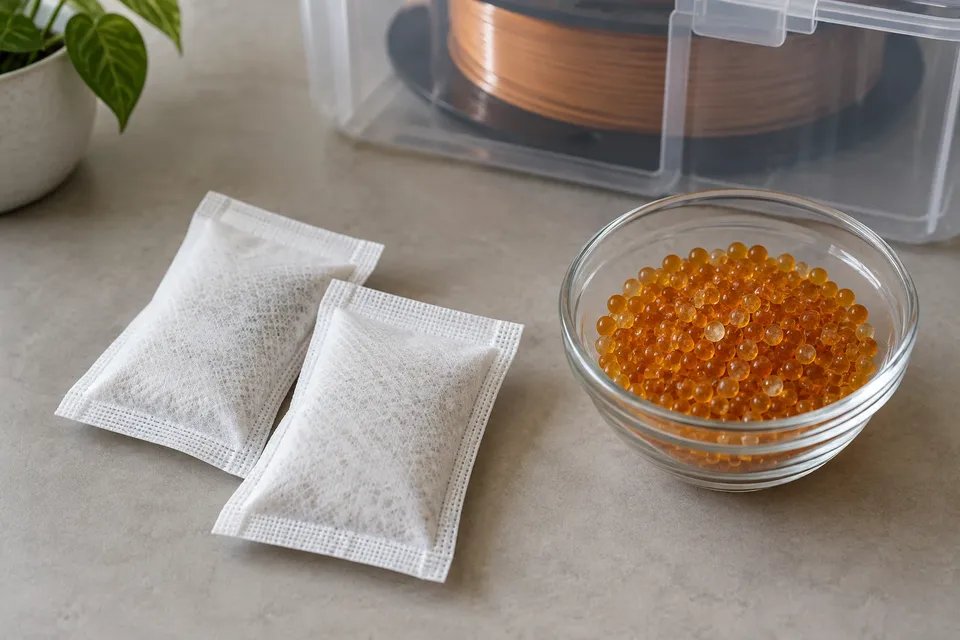
If you have mixed leftovers from several packages with no labels, it may be more practical to replace them with a known product. Having documented instructions is useful each time maintenance comes around; guessing the material leaves you without a reliable color interpretation or heating procedure.
Keep the replacement packaging or a short note with its name and directions. You do not need an elaborate log, but you should be able to identify the product after the original shopping listing changes.
Read the indicator according to its own color scale
Color-changing silica gel does not use one universal dry-to-wet color scheme. Match the current beads to the directions for that product and batch. Clear or white beads without an indicator cannot provide the same visual cue.
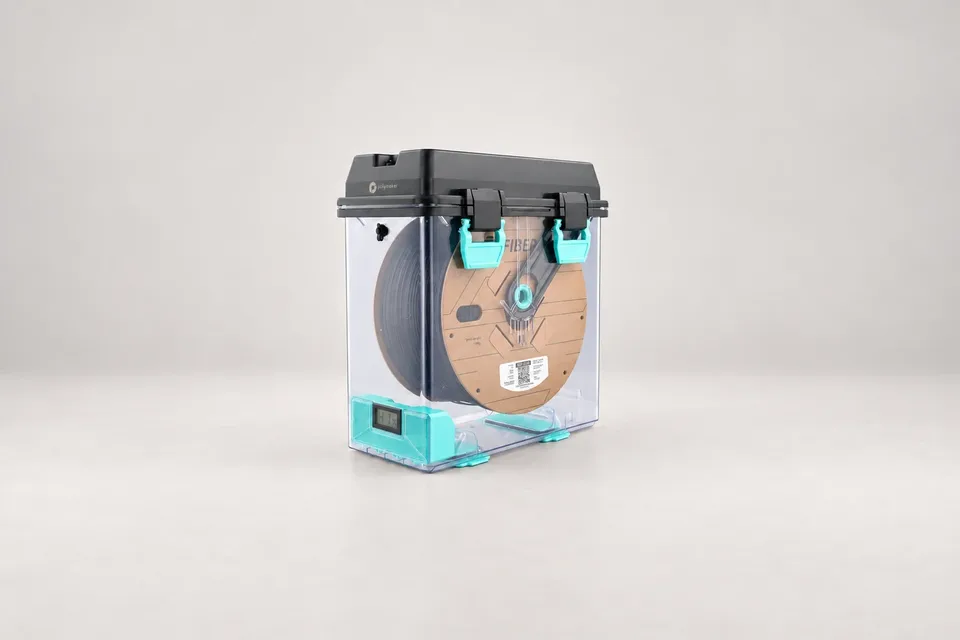
For example, Polymaker’s PolyDryer FAQ describes orange as dry and dark green as wet for its documented desiccant, with an exception for early batches. That example should not be used to classify every orange, blue or green bead you encounter.
Inspect the quantity as well as one conspicuous bead. If the supplier describes a change across most of the charge, one changed bead is not the complete trigger. Conversely, unfamiliar colors or visibly damaged packaging call for identification or replacement rather than an improvised regeneration attempt.
Allow the humidity reading to settle
Opening a box to change spools also changes the air inside it. Close the box properly and allow the reading to stabilize before deciding that the desiccant has failed. Keep temperature and opening events in mind when comparing readings; a quick glance immediately after loading is a different observation from a settled closed-box reading.
Prusa’s USS Drybox instructions allow up to an hour for stabilization and tie desiccant maintenance to the recommended humidity for the stored material. That is guidance for this dry box, not a fixed waiting time or target for every container and sensor.
If the closed-box reading remains above the applicable target, inspect the system before adding more beads. Was the lid latched fully? Are unused ports capped as directed? Does the seal sit properly, without a trapped strand or debris?
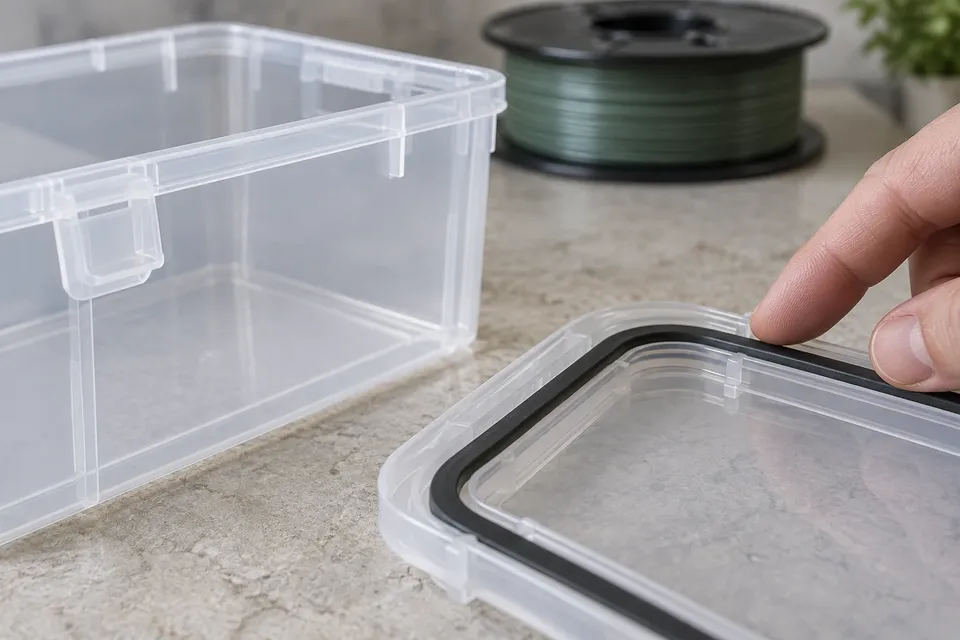
Prusa’s same instructions stress sealing and avoiding unnecessary opening. On your own box, inspect the seal in the way its maker permits; do not remove a seal that the instructions say to leave in place. A maintenance routine should not damage the component it is supposed to check.
An implausibly fixed or inconsistent reading also deserves a sensor check. Confirm that the hygrometer is working and understand its measurement range before treating its lowest displayed value as an exact measurement. Do not turn the last digit on a small display into a measurement of the filament’s water content.
Recharge only with a complete product procedure
A usable regeneration instruction identifies the product, temperature or power setting, duration, container and any parts that must be removed. Read all of those together. The temperature alone is not a complete recipe.
For one specific example, Polymaker describes removing only the silica gel from its PolyDryer Box, placing it in a heat-resistant container and using an oven at 100–120°C for 1–2 hours, until the documented orange color returns. The plastic box and other parts are excluded. This method belongs to the stated desiccant; do not transfer it to an unidentified sachet or another cartridge.
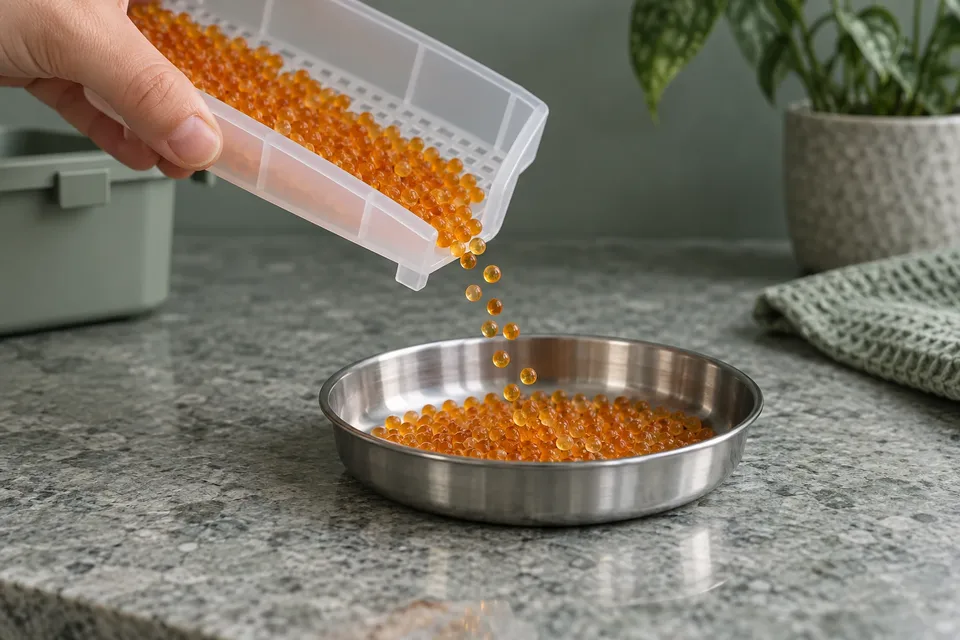
Prepare the permitted container and working area before opening the charge. Keep the desiccant separated from the filament spool and any components that are not included in the procedure. Use the supplier’s specified method rather than combining an oven recipe with advice for a different appliance.
Follow the product’s cooling and storage directions after regeneration. Return the charge to the dry box or its sealed storage container as directed, rather than leaving it exposed on the workbench. Clearly separate a ready charge from one waiting for maintenance if you keep a spare.
When replacement is the clearer choice
- You cannot identify the material or its packaging. There is no dependable reuse procedure to follow.
- The packet or cartridge is damaged. Loose material may escape into the box or interfere with its moving spool.
- The supplier specifies replacement. Reusability should come from that product’s directions.
- The documented procedure does not restore normal service. After checking the enclosure and sensor, replace the charge or ask the supplier rather than increasing heat on your own.
Choose replacement material and a holder suitable for the box. Do not obstruct the spool, outlet or other required clearances with an oversized packet. Keep loose beads contained in the manner the box maker intended.
Make maintenance easy at the next spool change
Keep the product identity, its maintenance trigger and its permitted method together. At each change, inspect the seal and retain the filament end before closing the container. The broader storage checklist can help keep those small handling jobs consistent.
After replacement or approved regeneration, close the box and compare a stabilized reading under similar conditions. You are checking that the storage system is back in its intended operating range. If that result remains poor, investigate the container and measurement again; repeatedly cooking the desiccant cannot compensate for a lid that keeps admitting humid air.
Our standard: Clear sources, practical limits, and no invented test results. Read our editorial policy.
Daniel Foster
Daniel covers filament selection, drying, storage, material compatibility, print temperatures, and the practical tradeoffs between common 3D printing materials.