Roller or Shaft? Choosing a Filament Spool Holder
Compare roller and shaft spool holders by rim condition, hub fit, mounting stability and loading access, then check the setup with your actual reel.

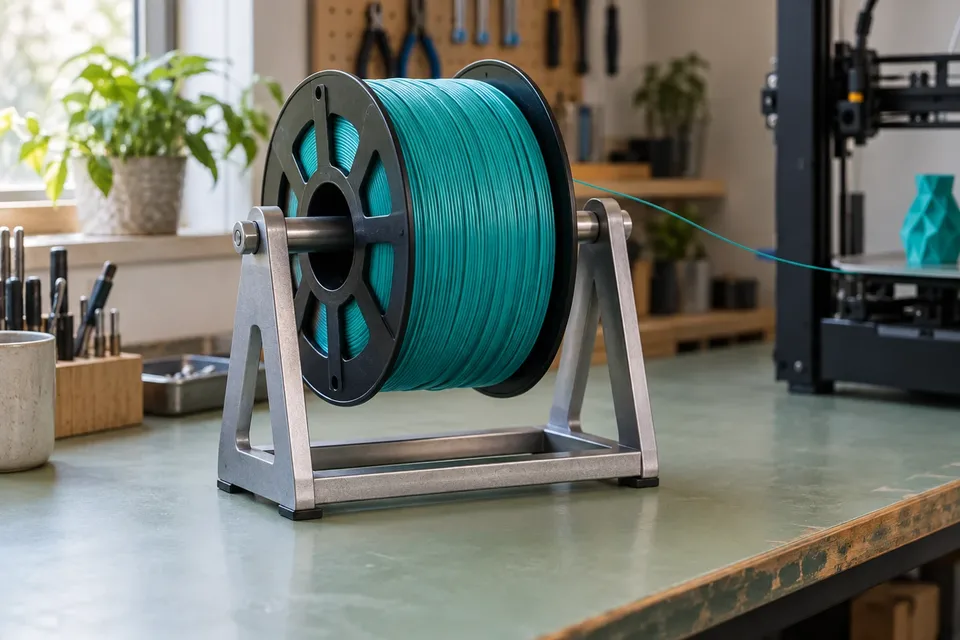
A spool holder can look like the least important part of a printer until a reel catches every half turn or pulls the stand across the desk. Buying more bearings is not always the answer. The useful question is which part of your spool will carry its weight, and whether that surface can move consistently.
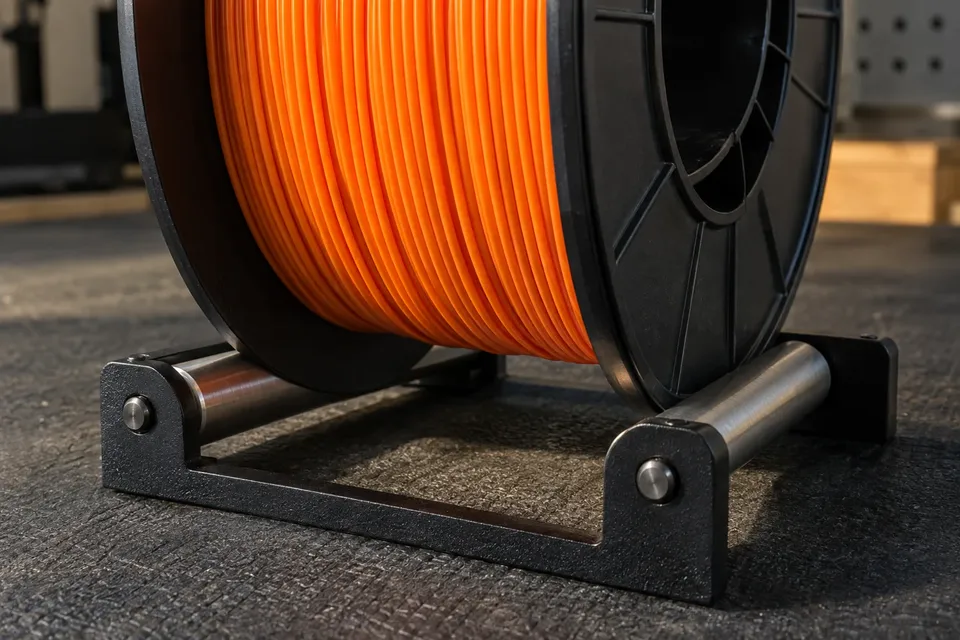
A roller holder supports the flange rims; a shaft holder supports the centre hole. Choose between them by inspecting those contact surfaces, then consider the mounting position and how you will change rolls. Neither design earns a universal “low-friction” advantage just from its name.
The contact surface decides the first shortlist
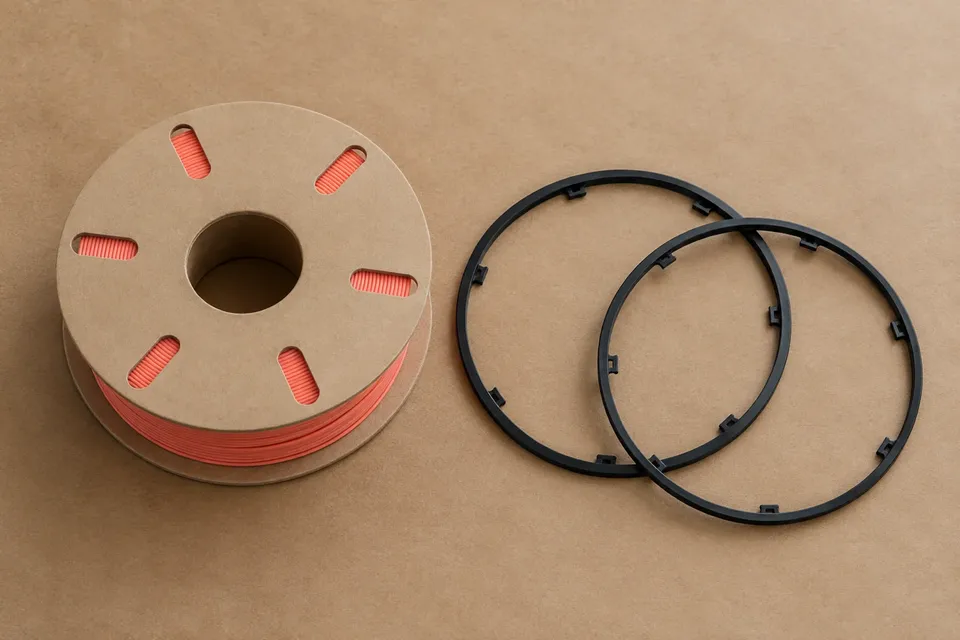
On a rim-supported holder, the two flanges act like wheels. A circular, intact edge is therefore part of the mechanism. A crushed cardboard edge, an uneven protective ring or a projecting label can produce a catch even when the bearings below it turn freely.
The rollers must support both flanges in the intended positions. A reel that barely balances on the ends of a cradle is not a successful fit. Look at the supported width range and whether the holder adjusts without twisting the rollers out of alignment. Keep the flanges clear of the side frames throughout a complete turn.
A shaft design moves the important contact to the hub. Check the hole diameter, the available shaft length and any locating cones, shoulders or end stops. The reel needs enough room to rotate without being clamped between supports. Excess sideways movement can also let a flange reach a bracket or make the strand approach its guide at an awkward angle.
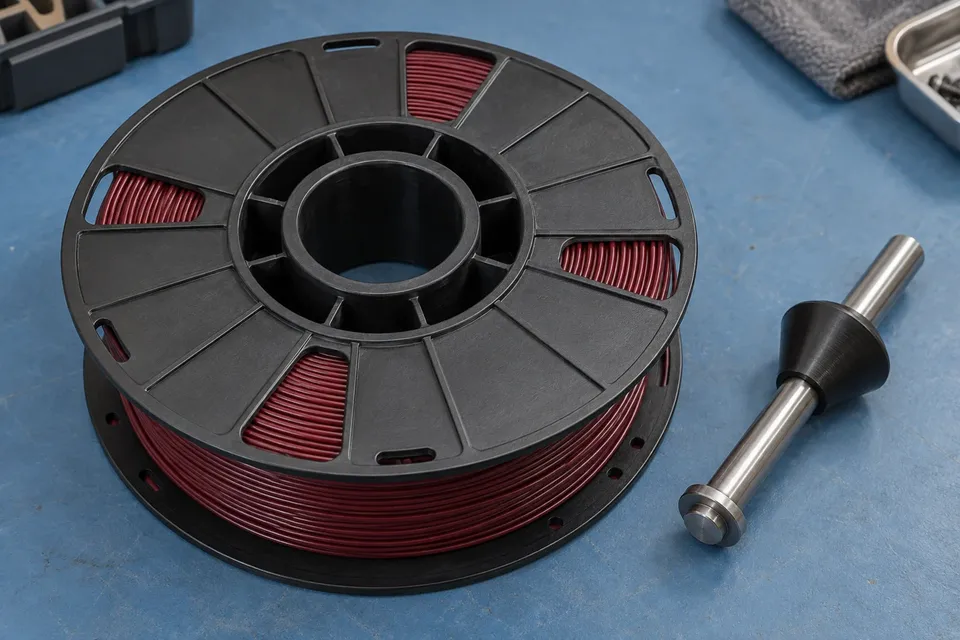
There is a practical tradeoff here. A damaged rim may be irrelevant to a hub-supported reel, but a distorted centre hole is not. A roller cradle avoids threading an axle through the hub, but asks more of the rims. Inspect the rolls you actually buy rather than choosing a holder around a perfect demonstration spool.
Three setups, three different priorities
A single printer with occasional material changes
The existing manufacturer holder is a useful baseline. Keep it when reels sit securely, turn without repeated catches and can be loaded without awkward handling. A replacement should solve an identifiable problem: insufficient width, inconvenient access or a mount that puts the reel in the way.
For an external stand, sketch its position before ordering. Leave room to lift out a full reel and reach the retaining part. A stand that fits on the bench but needs to be dismantled behind the printer at every change may be a poor everyday upgrade.
Mixed spool sizes on an open workbench
An adjustable cradle is worth considering when the hub shapes vary substantially, provided the rim condition is consistent. A shaft arrangement can suit mixed rim materials when the bore and overall width are supported. Either choice still needs a load rating for the full roll; a photograph with an empty spool does not establish that rating.
Record the complete spool measurements, including projecting hubs. A nominal kilogram size is not a mounting specification. The holder’s own supported dimensions matter more than the name of the filament pack.
A system that loads and unloads filament automatically
Automatic feeding adds reverse movement and may depend on a buffer, spool rewind mechanism or specified holder arrangement. Do not substitute a free-spinning stand just because it feels smooth by hand. Use the equipment’s supported layout and loading procedure; the route must also manage filament returned during unloading.
Prusa’s MMU3 assembly documentation, for example, treats spool holders and the buffer as parts of the complete setup. That is a reason to check the system instructions, not a claim that every multi-material unit uses the same supports.
A stable base is part of the feed mechanism
The stand should remain in place as filament is drawn from the reel. Examine the footprint, feet and mounting hardware, as well as the spinning parts. A narrow stand near a bench edge has little room to recover from a sideways pull. Reposition it on a stable surface rather than using an improvised load that interferes with the spool.
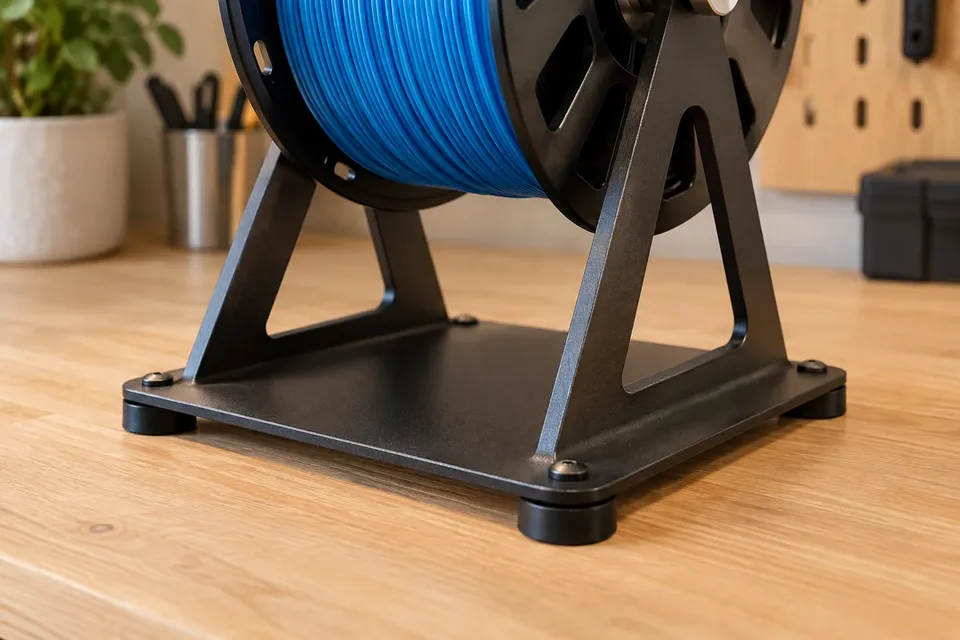
A frame-mounted holder saves desk space but needs a mount approved for that printer and load. Check access to the printer, moving components and enclosure panels. For a printable bracket, the designer’s material, orientation, fasteners and load limitations belong in the decision; changing those details changes the part you are relying on.
The acceptance check happens with filament moving
With the printer unloaded according to its instructions, place the actual reel on the holder and keep the filament end under control. Draw a short length in the intended direction while watching one full revolution. Observe the hub, both rims and the base. A repeated catch suggests a local contact problem; a stand that shifts suggests a mounting or routing problem.
Then follow the normal loading routine and observe a short familiar print. Do not reach into moving equipment to straighten the reel. Stop and unload as directed before making changes.
A loose winding can defeat an otherwise good holder. Prusa’s tangled-filament guidance emphasizes keeping control of the free end. Secure it whenever the reel is removed. For cardboard rims, decide separately whether a protective adapter ring addresses the contact problem.
Keep the holder that makes normal loading repeatable. The successful outcome is a reel that remains supported, a stand that stays put and no recurring snag—not the longest spin after flicking an empty spool.
Our standard: Clear sources, practical limits, and no invented test results. Read our editorial policy.
Lucas Hayes
Lucas plans the space around the printer: workbenches, ventilation, filament storage, tools, enclosures, power, and everyday workflow.