AMS Spool Compatibility: Size Checks by Model
Check spool width, outer diameter and hub size for original AMS, AMS 2 Pro and AMS lite, then assess adapters and material feeding separately.

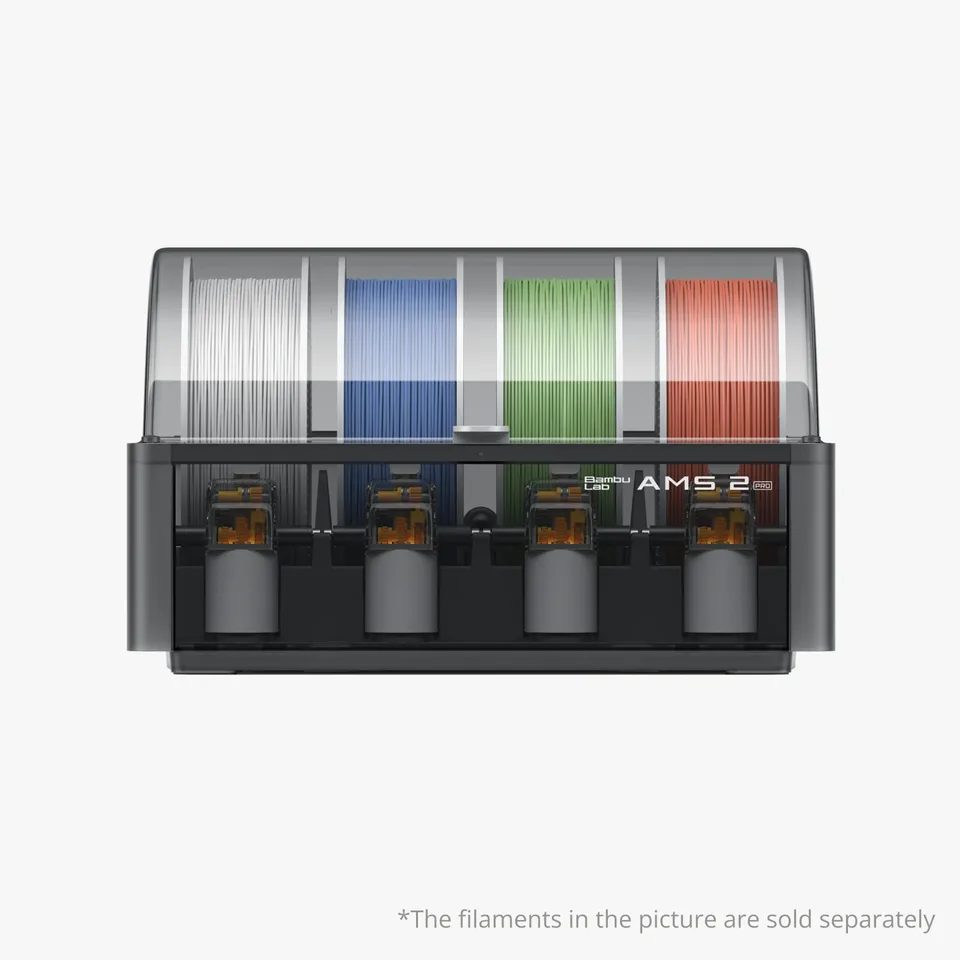
AMS spool compatibility starts with the model name on your feeder. The original AMS and AMS 2 Pro use the spool’s outer rim as a working surface. AMS lite mounts the spool through its center. A diameter that matters on one system therefore cannot stand in for the diameter that matters on another.
Use the table below to screen dimensions, then inspect the actual spool and filament. Being inside a size range is a useful first check, not a guarantee that a damaged rim, a loose adapter or an unsuitable material will load and retract correctly.
The three models have different dimension checks
| Model | Spool width | Relevant diameter | Official specification |
|---|---|---|---|
| Original AMS | 50–68 mm | Outer diameter: 197–202 mm | Original AMS product page |
| AMS 2 Pro | 50–68 mm | Outer diameter: 197–202 mm | AMS 2 Pro product page |
| AMS lite | 40–68 mm | Inner diameter: 53–58 mm | AMS lite product page |
These are ranges, including lower limits. A spool narrower than the listed range does not become compatible simply because it leaves plenty of room in the enclosure. Likewise, the AMS lite hub specification is not an outer-diameter recommendation.
This comparison covers those three models only. Use the corresponding specifications for AMS HT or another feeder. It also concerns spool fit, not printer connection hardware, dryer operation or every available filament formulation.
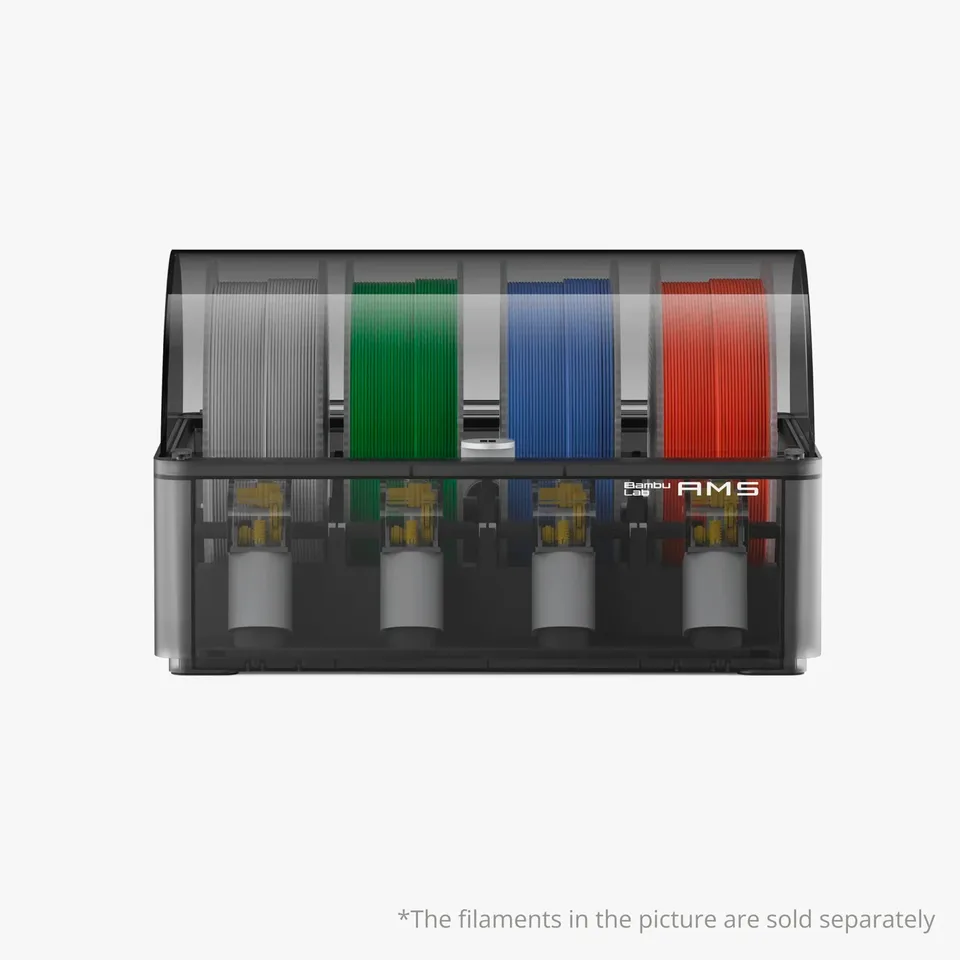
Measure the spool you will actually install
Total width means the outside faces
Measure across the two outermost flange faces, including protruding features that can occupy the slot. The gap between the flanges is the winding space; it is not the total spool width. Keep the measuring tool aligned with the spool’s axis rather than measuring a diagonal across a tilted spool.
If the flanges appear distorted, take measurements at more than one position. A single narrow reading cannot describe a visibly bowed spool. When buying online, ask for the spool dimensions of that exact product and package size. A “1 kg” label describes the filament quantity and does not supply the missing measurements.
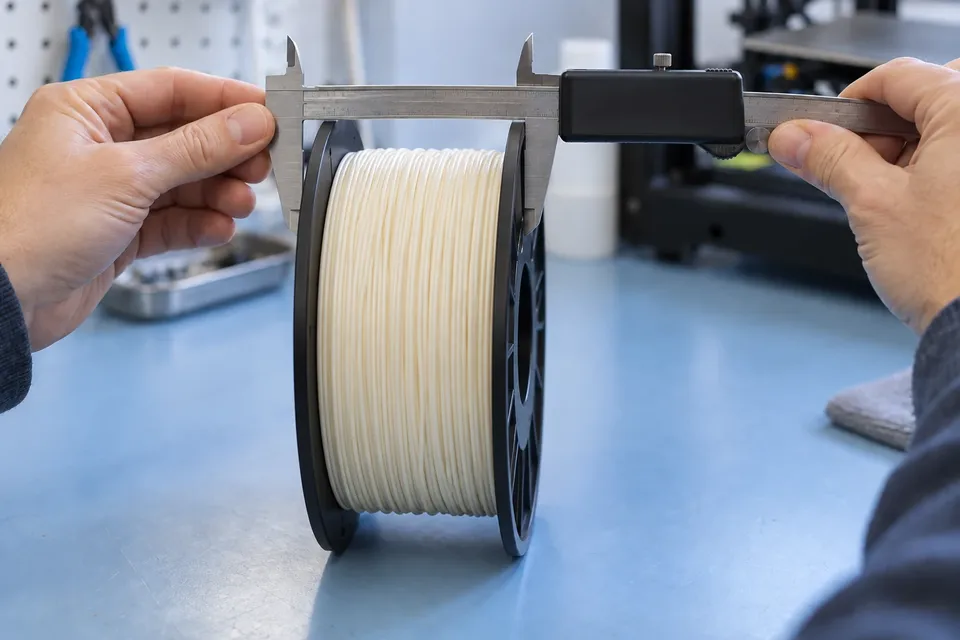
Outer diameter includes the finished rim
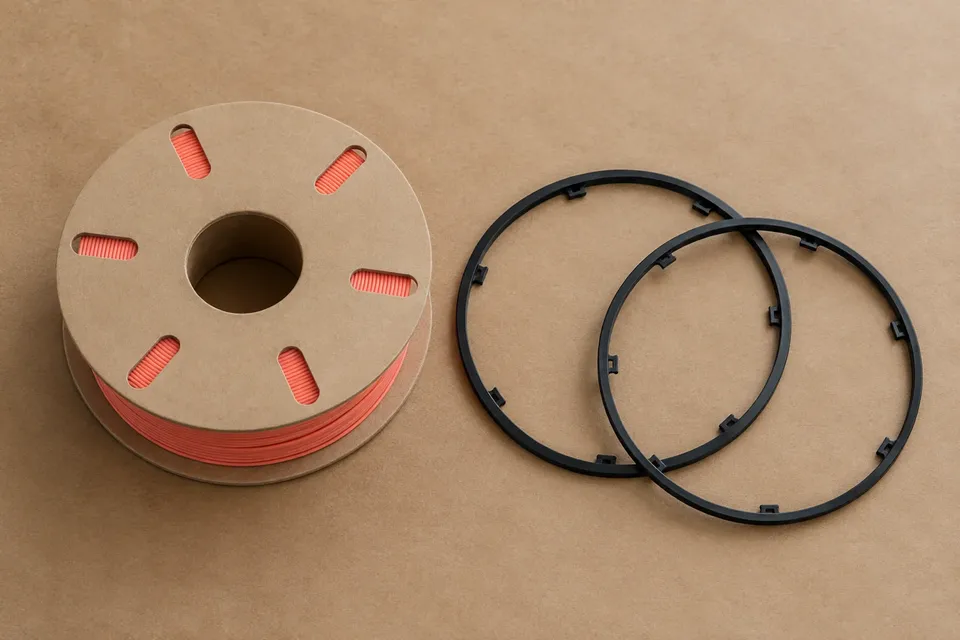
For original AMS and AMS 2 Pro, measure across the largest outside rim. Include an adapter ring if you plan to use one. A diameter measured on the bare cardboard flange is no longer the finished diameter once a ring is fitted.
Inspect both flanges while rotating the spool off the machine. Dents, oval edges and a ring that sits proud at one point deserve attention even when the nominal diameter is in range. Our spool measurement guide shows how to separate outer diameter, width and the center opening.
Inner diameter is the mounting opening
For AMS lite, measure the opening that will engage its spool holder. Do not substitute the outside diameter of the raised hub or the spacing between flange spokes. Check both entrances and look for an internal shoulder or obstruction that the opening measurement does not describe.
A bore that appears large enough at its mouth may have a smaller passage farther inside. If its shape is unusual, compare the spool maker’s drawing with the holder rather than forcing the spool onto the mount. The published 53–58 mm range should be read alongside the physical mounting instructions.
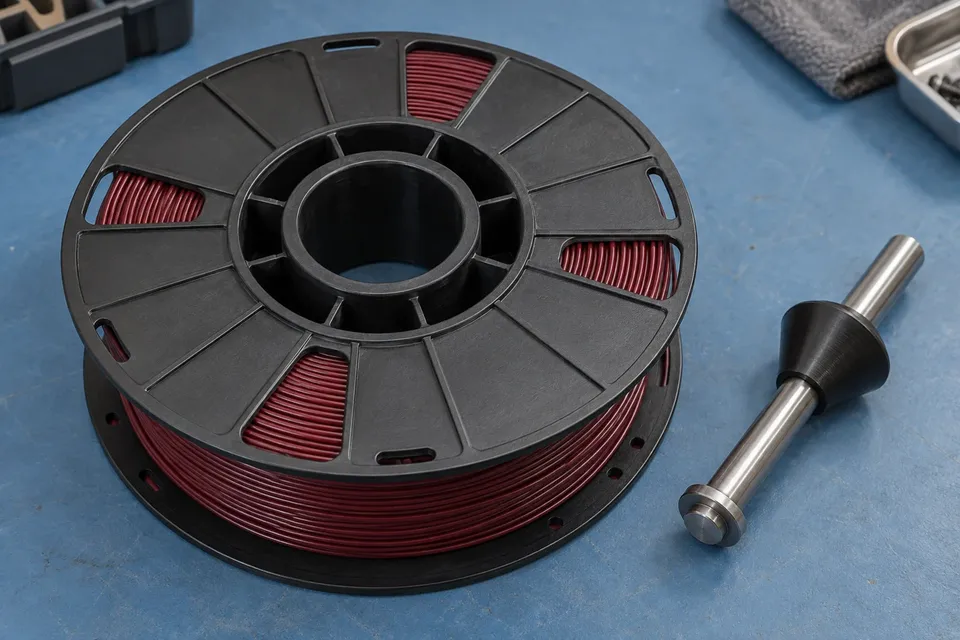
Check the surface that supports the spool
The original AMS and AMS 2 Pro support and turn spools on rollers. Look at the rim that will contact those rollers, not just the number on a ruler. A loose ring, soft edge or distorted flange can change that contact as the spool turns.
Bambu Lab’s original AMS page recommends plastic spools and cautions about cardboard dust. An adapter decision should account for the finished rim, its security and the manufacturer’s guidance for your specific system. It should not reduce to “all cardboard needs the same ring.” The cardboard adapter-ring guide covers that separate choice.
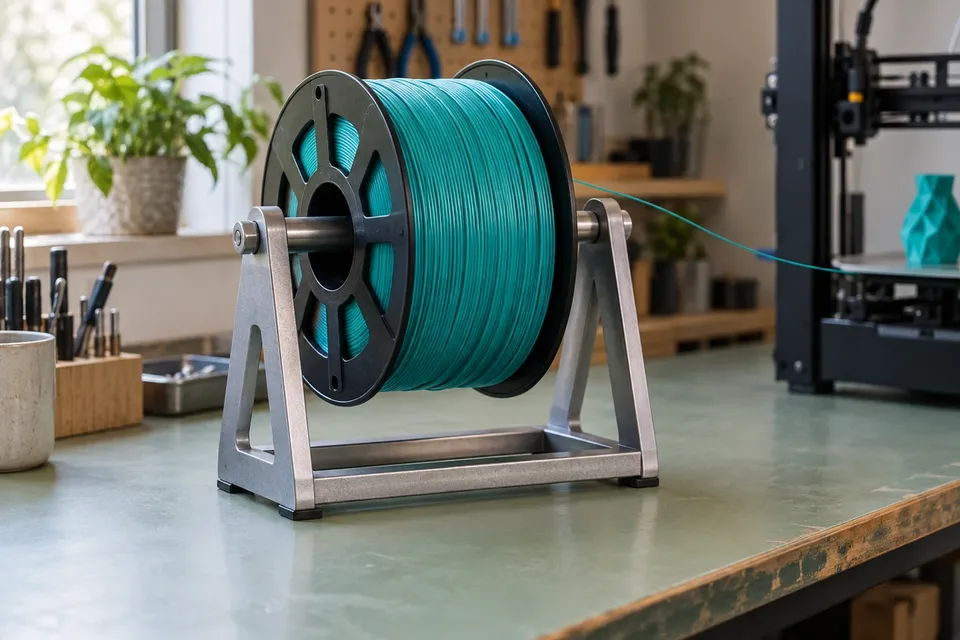
AMS lite’s center mounting puts the emphasis elsewhere: the opening must engage the holder as intended, and the spool must remain seated while it turns. A rim adapter cannot repair a center opening that does not fit.
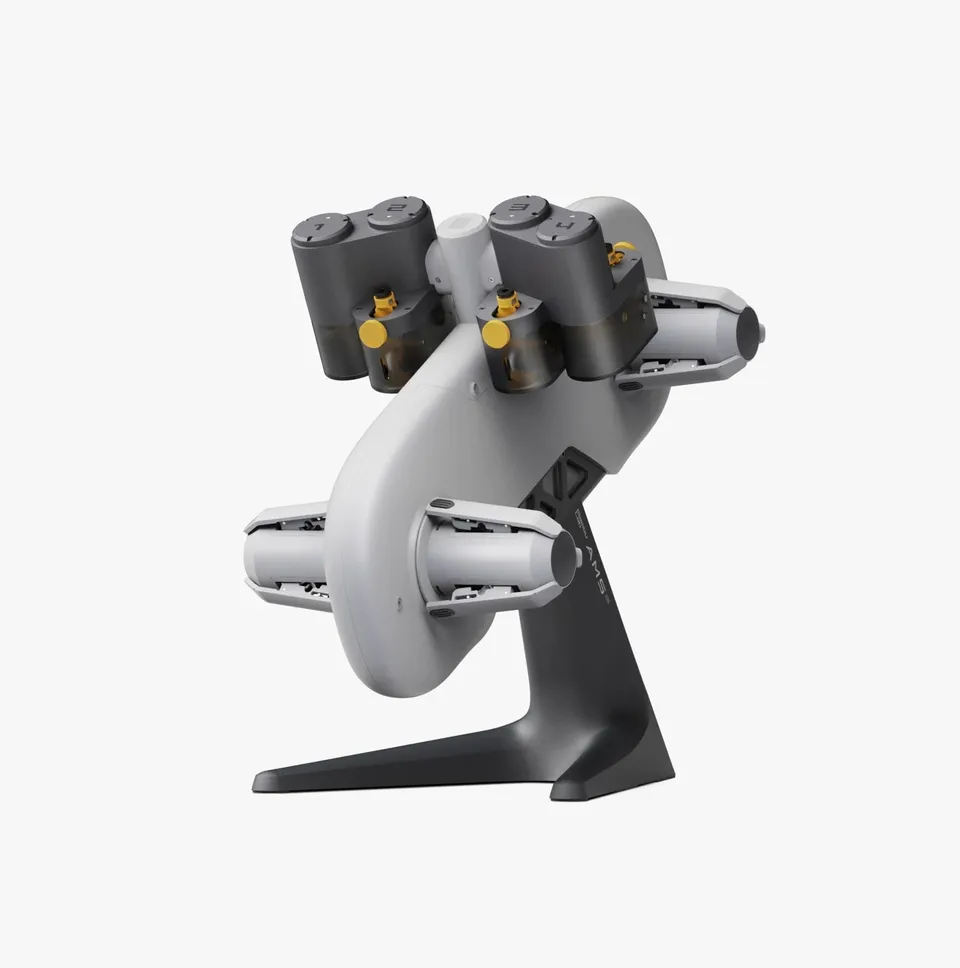
This is why advice about a roller system can fail on a shaft-mounted system. Our roller and shaft support comparison explains the two contact arrangements without assuming they accept the same spool.
An adapter changes the object you are checking
Fit the proposed adapter before making the final dimensional comparison. Measure again, inspect how it sits and make sure it does not rub against another part of the feeder. If two rings are involved, check both rather than assuming the second is identical after installation.
Consider what the adapter is meant to fix. A rim ring may provide a different rolling surface. A hub insert may change the center mounting. Neither automatically resolves excessive width, a bent spool or unstable winding. Multiple adapters can also make a previously simple fit question harder to inspect.
For a purchase decision, keep the supplier’s actual spool drawing with the product details. Spool designs can differ across sizes or change over time, so a brand name alone is a weak substitute for measurements.
Material compatibility is a separate gate
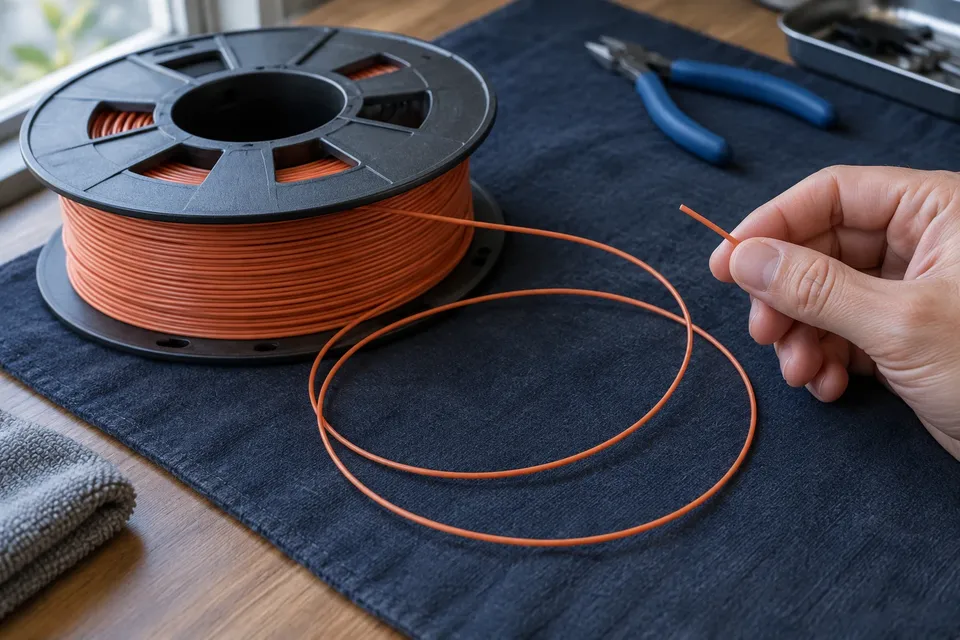
A correctly sized spool can still contain filament the feeder should not handle. Compare the exact material with the compatibility information for your model. For example, Bambu’s specifically named TPU for AMS must not be treated as proof that ordinary flexible TPU is suitable. Reinforced and other specialty formulations also need their own check.
Do not confuse a material’s printing profile with permission to route it through every AMS. The printer may be able to print a filament through an external path while the automatic feeder has different restrictions.
A checker that compares only maximum outer diameter and width is not a complete AMS compatibility check. It misses the lower bounds in the table and AMS lite’s center opening. Keep all the model-specific dimensions together instead of treating a generic “fits” result as approval for an automatic feeder.
Before starting a long multicolor print
- Confirm the model and both bounds of its relevant size ranges.
- Check the completed spool with any adapters already fitted.
- Inspect the rim or hub that actually supports it.
- Verify the exact filament formulation is permitted.
- Follow the normal loading procedure and observe feeding and retraction without reaching into a running mechanism.
The useful outcome is a spool that fits, sits correctly and moves through the required cycle. If it clears the size table but slips, rubs or struggles during retraction, investigate that physical behavior before calling it compatible or sending a long job.
Our standard: Clear sources, practical limits, and no invented test results. Read our editorial policy.
Lucas Hayes
Lucas plans the space around the printer: workbenches, ventilation, filament storage, tools, enclosures, power, and everyday workflow.